

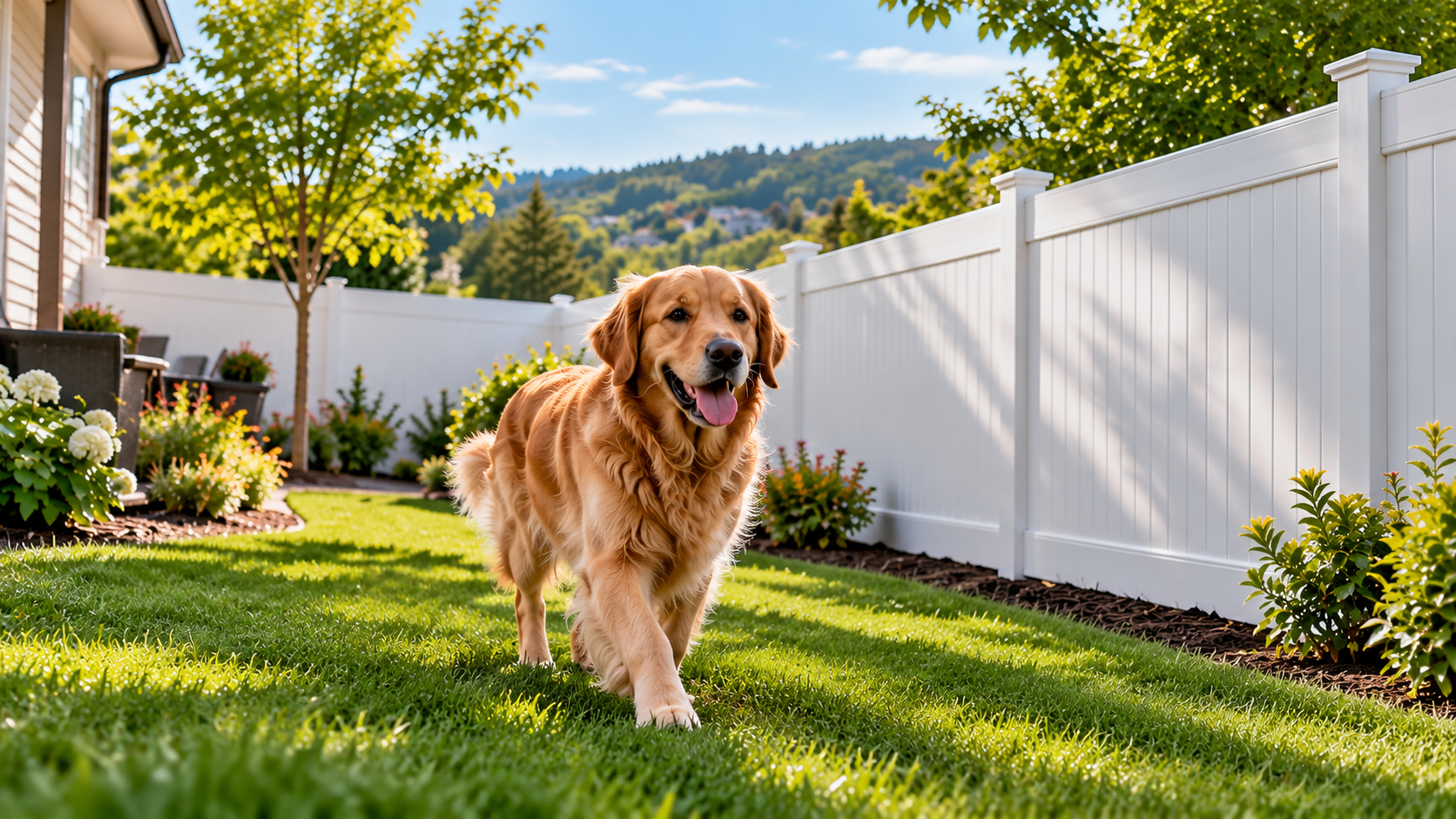
Your dog loves spending time outside, but keeping them safely in your yard isn't always easy. Maybe they jump at the fence whenever someone walks by, dig along the property line, or have a talent for finding openings you didn't even know existed.
If you're considering a new fence, you want something that gives your dog room to play without constantly worrying about an escape.
The best fence for dogs depends on their size, behavior, and ability to jump, climb, or dig. In Greater Pittsburgh, your property's layout and ground conditions also deserve consideration.
Which Type of Fence Is Best for Keeping Dogs in the Yard?
Vinyl privacy fencing, wood, aluminum, and chain link can all provide effective pet containment when properly designed and installed. The right choice depends on how your dog behaves and what you need from your yard.
Vinyl Privacy Fencing
Solid vinyl privacy fencing is often a good choice for dogs distracted by people, animals, or activity outside the yard. Its panels block direct views, which may help reduce visual triggers. Vinyl also requires relatively little maintenance and doesn't need painting or staining.
Wood Privacy Fencing
Wood offers similar privacy, with flexibility in fence height and design. Closely spaced boards can help prevent smaller dogs from squeezing through openings. Wood does require periodic maintenance, and loose or deteriorating boards can create escape routes.
Aluminum Fencing
Aluminum provides an open view while creating a defined enclosure. Its vertical pickets can be harder to climb than fencing with horizontal footholds, but spacing matters. For smaller dogs, choose a design with openings narrow enough to prevent them from slipping through.
Chain-Link Fencing
Chain-link fencing is a durable, practical option for enclosing larger yards. It provides visibility and requires minimal upkeep. Still, its woven openings can give determined climbers a foothold, while an unsecured bottom edge may allow dogs to dig underneath.
For dogs that react to people or animals outside the yard, vinyl or wood privacy fencing is often a good starting point. Aluminum can work well for dogs that aren't prone to climbing or squeezing through openings, while chain link may be practical for larger enclosures when appropriately secured.
If your dog has a history of escaping, the fence's height, ground clearance, and gate security deserve just as much attention as the material itself.
What Kind of Fence Works Best for Dogs That Jump or Climb?
For dogs that jump or climb, the first question is whether the fence is tall enough and designed without easy footholds.
A four-foot fence may contain some smaller or less athletic dogs, but determined jumpers often need something taller. A six-foot privacy fence is worth considering, although no height guarantees containment.
Solid panels offer fewer footholds than designs with exposed horizontal rails. And even a tall fence can become easier to clear if your dog has a nearby retaining wall, stack of materials, or piece of outdoor furniture to use as a launching point.
You'll also need to check local fence-height restrictions and approval requirements. The City of Pittsburgh requires zoning review for fences six feet or less, while surrounding municipalities may have different rules.
How Do You Keep a Dog From Digging Under a Fence?
A six-foot fence doesn't offer much protection against a dog determined to dig their way underneath it.
For persistent diggers, reinforcing the bottom of the fence is often more useful than increasing its height. Depending on the material and property conditions, options include:
- Buried fencing or mesh: An underground barrier can make tunneling beneath the fence more difficult.
- A secured bottom edge: Properly secured chain link or other suitable reinforcement can help limit openings near the ground.
- Targeted reinforcement: Additional protection may help in areas where a dog repeatedly digs.
Any buried reinforcement should account for drainage, underground utilities, and pet safety. Exposed sharp edges or unsuitable materials can create hazards.
Dogs may dig because they're bored, looking for cooler ground, or curious about an interesting smell coming from the other side of the fence. Regular exercise and enrichment can help address some of these behaviors.
What About Dogs That Squeeze Through Gaps or Escape Through Gates?
Not every dog needs to jump or dig to make an escape. Some are surprisingly good at finding the weak spots in a fence. Smaller dogs may squeeze between widely spaced pickets or beneath panels, while others push through loose sections or unsecured gates.
If you already have fencing, repairing damaged panels, loose boards, or poorly aligned gates may help close escape routes without requiring a complete replacement.
Check for openings beneath the fence, gaps where sections meet buildings, and hardware that doesn't latch securely.
Gates deserve particular attention because they're opened and closed regularly. A properly fitted custom gate with suitable latching hardware can help prevent accidental openings. For particularly determined escape-prone dogs, self-closing hardware or a second secured entry point may also be worth considering.
How Do Pittsburgh Yard Conditions Affect a Dog Fence?
Even with the right fence material and secure gates, the shape of your yard can create challenges. Uneven ground, slopes, and dips may leave openings beneath fence panels, while erosion or repeated digging can create new gaps over time.
Pittsburgh's rain, snow, and freeze-thaw cycles can also affect soil conditions and contribute to wear on fence components. That's why planning should account for more than how the fence looks on installation day.
A contractor should evaluate the ground along the proposed fence line, consider ground clearance and drainage, and identify vulnerable areas that may need additional attention.
Once installed, inspect your fence periodically, particularly after severe weather, to catch developing gaps or damage.
What Should You Consider Before Choosing a Fence for Your Dog?
Think about what happens when your dog is outside. Do they spend the afternoon relaxing in the grass, or does every passing squirrel send them racing toward the fence?
Once you understand your dog's habits, it's easier to narrow down the fence height, design, and features that make sense for your yard.
Next, consider how much space you want enclosed. Some homeowners prefer fencing the entire backyard, while others need a dedicated area for their dog.
Your budget, maintenance preferences, and desired appearance also matter. Consider which options fit your property and how much upkeep you're comfortable with.
Before installation, confirm your property boundaries and any applicable municipal or HOA requirements.
Find the Right Dog-Friendly Fence for Your Pittsburgh Home
Whether your dog is a jumper, a digger, or simply good at finding an escape route, the right fence should give them room to enjoy the yard while helping you feel more confident about keeping them contained.
At Fence & Railing Unlimited, LLC, we help Greater Pittsburgh homeowners choose fencing solutions suited to their properties, priorities, and budgets. With more than 20 years of hands-on installation experience, owner David Porter personally evaluates each project during the estimating process.
Whether you're considering vinyl, wood, aluminum, or chain link, our team can help you compare options and plan an enclosure with your dog's needs in mind.
We serve homeowners throughout Allegheny, Beaver, Butler, Washington, Fayette, Westmoreland, and Lawrence counties.
Contact Fence & Railing Unlimited, LLC or call 412-275-4458 to request a free estimate and discuss the right fencing solution for your home and your dog.
Disclaimer: This article is for general informational purposes only. Fence requirements, permitting rules, installation methods, and site conditions vary by property and municipality. A professional on-site evaluation is recommended before planning or installing a fence.